

The challenge for CX and contact‑centre teams today isn’t just handling more work, it’s about delivering greater impact through the right tools and confident, capable leadership.
Nearly 93% of executives acknowledge that their customer experience is broken. At the same time, 85% of customer service leaders plan to explore or pilot customer-facing conversational generative AI, with 80% of organisations expected to use AI by the end of the year for functions such as routing, coaching, or analytics.
These efforts promise improvement but can also add complexity and overwhelm teams. The gap between recognising the need for change and being ready to act is growing, and with rising expectations, evolving technology, and human pressures, companies must focus on scaling smarter – with strong leadership as the bridge that makes it possible.
Pressure to deliver at scale
As organisations grow, the expectations on CX teams grow too. Leaders demand measurable results, stakeholders expect rapid insights, and customers anticipate seamless, personalised experiences.
For teams without clear direction, these demands can be challenging. Many CX professionals find themselves navigating a maze of analytics platforms, survey tools, and feedback channels, often without a structured approach to prioritise actions. The outcome is predictable – tool fatigue sets in, confidence in systems erodes, and the link between insight and action weakens.
It is here that strong leadership becomes indispensable. Leaders must do more than manage workflows. They must empower teams with clarity, foster trust in the tools at their disposal, and cultivate a culture that balances data-driven insight with decisive action.
In fact, research highlights that contact-centre team leaders are a key driver of performance, engagement, and retention. Skilled, supported leaders help agents stay motivated, confident, and invested in their work, while weak or underdeveloped leadership can directly undermine team effectiveness.
Without this support, even the most sophisticated tools remain underutilised, and CX strategies risk becoming reactive rather than proactive.
Coaching for clarity and confidence
CX teams thrive when their leaders have the headspace and perspective to lead well – making leadership coaching one of the most impactful tools for wider team success. Coaching gives leaders a space to think. It helps them cut through noise, prioritise what really matters, and navigate change with confidence. A coached leader is more decisive, more consistent, and better able to communicate a clear sense of direction — inspiring confidence and clarity in their teams.
These benefits aren’t just theoretical. Research shows that 80% of people who receive coaching report increased self-confidence, and more than 70% experience improvements in work performance, communication, and relationships. The organisational impact is equally compelling with 86% of companies saying they recoup their investment in coaching.
For CX organisations under pressure to demonstrate clear ROI, coaching provides tangible value by strengthening leadership capability, reducing friction, improving team alignment, and enabling more effective execution.
Coaching also helps professionals develop a sense of ownership over the insights they gather. Instead of treating reports and dashboards as static deliverables, leaders can ask themselves, and coach their teams to ask, critical questions: What does this data tell us about our customers? How should it influence our next actions? Through consistent coaching, CX teams learn to connect insights to initiatives, fostering a proactive approach to problem-solving.
Embedding accountability
Structure and accountability are often overlooked in CX operations, yet they are vital for scaling impact. Embedding simple, consistent rituals, such as weekly insight reviews, cross-functional alignment meetings, and action-planning sessions, creates predictable touchpoints for reflection and decision-making. Leaders play a crucial role in embedding these rituals through ongoing coaching habits, ensuring that insights do not languish in dashboards but instead translate into tangible improvements for customers.
Moreover, rituals reinforce a culture of accountability. When team members regularly review progress against shared objectives, they develop confidence in their work and the tools they use. This process strengthens both team cohesion and the organisation’s ability to respond to customer needs dynamically.
Trusting tools to deliver value
At the heart of the challenge is the gap between tools and action. Organisations invest heavily in analytics platforms, feedback systems, and customer journey mapping software, but the mere presence of these tools does not guarantee value.
Teams must be guided to trust the data and understand how it aligns with strategic priorities. Leadership plays a pivotal role in this process, providing the coaching, context, and structure needed to translate insights into decisive action.
When teams trust their tools, they act with confidence, leading to initiatives that are not only faster and more targeted but also measurable in terms of customer satisfaction, retention, and loyalty. Strong leadership ensures that the bridge between insight and action is robust, enabling CX teams to deliver consistent, high-impact outcomes even as the organisation scales.
Scaling smarter, not harder
Scaling CX operations is not simply a matter of adding headcount or deploying more technology. It requires intentional leadership, structured processes, and an embedded culture of accountability. By investing in coaching, creating consistent rituals, and building trust in the tools at hand, companies can turn scattered data points into actionable strategies that truly resonate with customers.
In the end, scaling smarter is about transforming potential into performance. CX teams, empowered with clarity, confidence, and leaders who are coached effectively, are able to act decisively, delivering measurable value that benefits both customers and the organisation. With the right approach, the promise of tools meets the power of action, and insight becomes impactful.
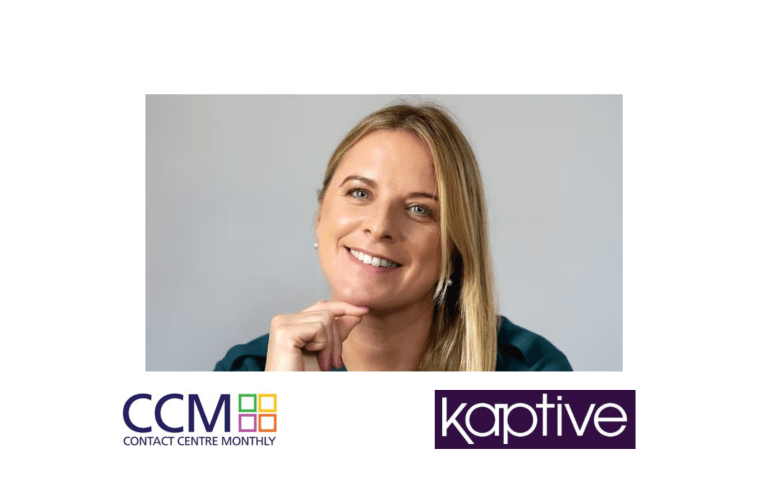
Customer Experience (CX) teams sit at the intersection of customer needs and company goals, yet they are often under-equipped to bridge the gap between insight and action. Deborah Knight, Founder of Kaptive, is keen to discuss how businesses can equip CX teams and their leaders to thrive at scale.