

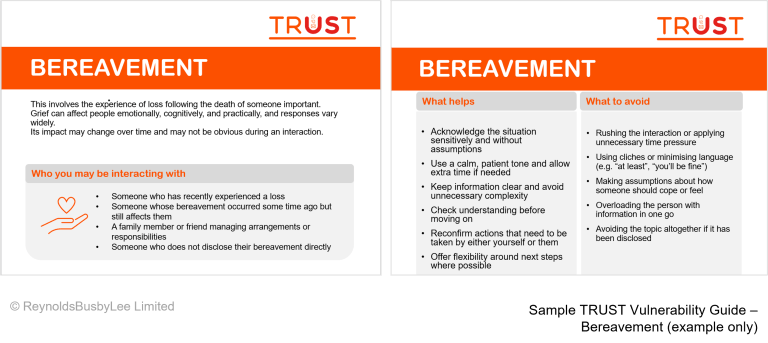
London, UK – January 2026 – Reynolds Busby Lee Ltd (RBL), the specialist consultancy behind the TRUST vulnerability framework, has today announced the launch of its TRUST Vulnerability Guides – 2026 Edition, alongside a refreshed and expanded approach to supporting organisations working with people in vulnerable circumstances.
The new Guides form part of RBL’s wider TRUST vulnerability work, which supports organisations to recognise vulnerability, respond proportionately, and embed consistent, human practice across customer, supporter, and service interactions.
Building on RBL’s established vulnerability resources, the 2026 Guides reflect changes in regulation, sector guidance, operational practice, and lived experience across financial services, utilities, housing, fundraising, and customer support environments.
Rather than offering prescriptive scripts or diagnostic labels, the Guides are designed to support better judgement, more confident conversations, and proportionate responses when vulnerability presents, often unexpectedly, in live interactions.

“Vulnerability doesn’t show up neatly, and it doesn’t stay still,” said Elaine Lee, Managing Director and Co-Founder of Reynolds Busby Lee.
“Despite progress, around four in ten customers in vulnerable circumstances are still not being recognised early enough. Through TRUST, we help organisations focus on what matters in the moment – recognising vulnerability sooner, often without the need for disclosure, and supporting people to respond with care, clarity, and confidence. When that happens, outcomes improve for consumers, colleagues, and organisations alike.”
The TRUST approach
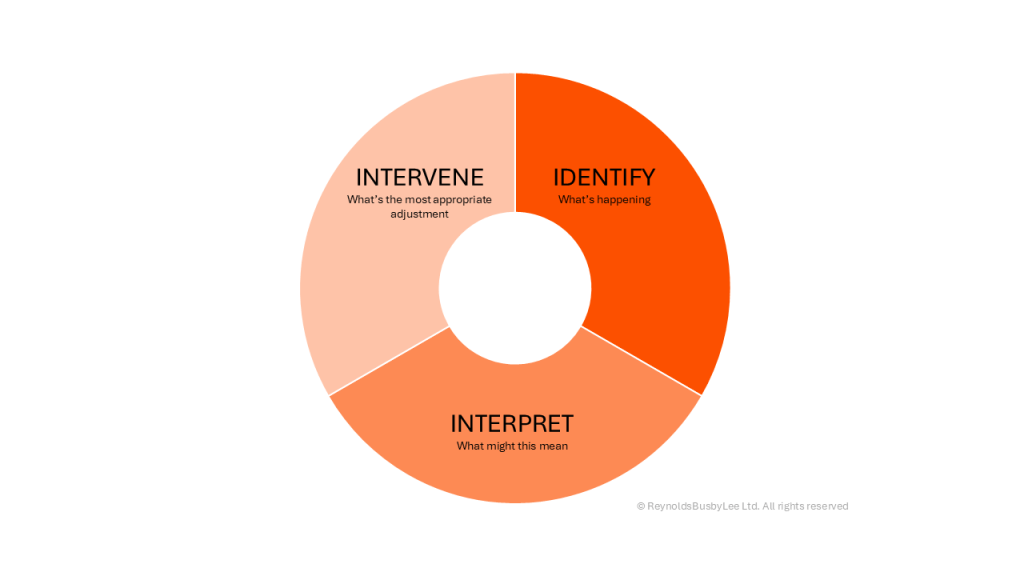
The TRUST Vulnerability Guides sit within RBL’s TRUST vulnerability framework and are underpinned by its practical operating principle:
“Identify what’s happening. Interpret what it means. Intervene appropriately.”
This disciplined lens helps frontline teams and leaders move beyond assumptions or labels, supporting sound judgement in real interactions and consistent, proportionate decision-making, even where circumstances are complex or ambiguous.
© Reynolds Busby Lee Ltd. All rights reserved.
What’s new in the TRUST Vulnerability Guides 2026 Edition
The refreshed Guides have been reviewed and updated to reflect:
- Current regulatory expectations and sector guidance
- The realities of modern contact-centre and service environments
- Increased awareness of situational, temporary, and compounding vulnerability
- The pressures facing frontline colleagues as well as customers and supporters.
Each Guide follows a consistent, practical structure, covering:
- What vulnerability may look or sound like in practice
- Why it matters in live interactions
- Reasonable adjustments that can make a meaningful difference
- Clear, proportionate “what to do now” guidance
- Signposting, escalation, and safeguarding considerations
The Guides are designed to be used flexibly – as training aids, desk-side references, coaching tools, and case-study prompts – and can also be embedded within knowledge-management systems or internal intranets. This supports consistency of application across teams, shifts, and channels, rather than relying on individual interpretation or memory.
Strengthening application through coaching and development
Alongside the TRUST Vulnerability Guides 2026, the bundle now includes RBL’s VULNERABLE coaching guide, designed to support reflection, coaching conversations, and ongoing staff development.
The VULNERABLE guide helps leaders and coaches explore how vulnerability is being identified, interpreted, and responded to in practice — supporting teams to reflect on real interactions, reinforce good judgement, and embed learning over time.
Together, the Guides and coaching tools enable organisations to move beyond awareness and into consistent, confident application, aligning training, coaching, and everyday decision-making
A refreshed approach to vulnerability support
Alongside the updated Guides, RBL has refreshed how its TRUST vulnerability work is positioned and delivered. This reflects a shift away from one-off training events, towards joined-up capability building that supports:
- Foundation and refresher training
- Case-study workshops using real interactions
- Observation and reflective practice for leaders
- Tools that help teams embed learning over time
Where organisations find that training, policies, or tools are not delivering the outcomes they expected, RBL also supports structured operational discovery work to understand what is happening in practice – including how vulnerability is being recognised, interpreted, and responded to across teams and touchpoints.
This insight-led approach enables organisations to move beyond surface fixes, aligning behaviour, decision-making, systems, and expectations, rather than simply adding more guidance or process.
At the heart of TRUST is the belief that handling vulnerability well is not just about knowledge, it’s about confidence, judgement, and organisational permission to respond humanly.
Who the Guides are for
The TRUST Vulnerability Guides 2026 are designed for organisations that:
- Handle emotionally complex, sensitive, or high-stakes interactions
- Work with customers, residents, donors, or service users in vulnerable circumstances
- Want to move beyond policy-led responses and support real-world decision-making
They are already being used by organisations across energy, housing, financial services, charity and supporter services, and other regulated customer operations.
For many organisations, previous editions of these Guides have provided a practical entry point into RBL’s wider TRUST vulnerability work.
Availability
The TRUST Vulnerability Guides 2026 are available now, with options for:
- Stand-alone purchase
- Integration into training and workshops
- Use within coaching, reflective practice, and staff development sessions to support confident, consistent responses over time
Organisations interested in the Guides, or in discussing how TRUST could support vulnerability capability within their teams, are invited to get in touch directly to explore options and pricing.
Media Contact
Elaine Lee FCIM MCIOF
Managing Director & Co-Founder
Reynolds Busby Lee
Tel: 020 3637 0966